


There was a month not long ago when I sat down and painted portrait after portrait.
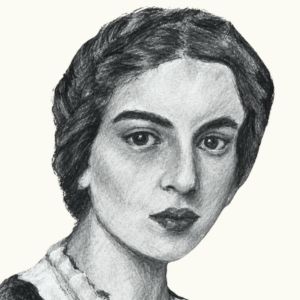
At the time, I had not seriously painted people since art school. My work had become deeply rooted in still lifes, landscapes, gardens, and the quiet rhythms of rural life. But the Wesleyville Collection was beginning to grow into something larger than paintings alone. I wanted it to feel inhabited. I wanted stories. I wanted characters.
So I began painting faces.
Some emerged quickly, almost as if they had been waiting patiently in the background all along. Meredith was one of the first.
She arrived with dark sunglasses, windswept auburn hair, and the distant expression of someone carrying too much in her thoughts. The painting came together in a single alla prima sitting — loose, instinctual, and emotional. I did not overthink her. I simply painted the feeling of someone trying to breathe again after a difficult day.
What I love most about portraiture is that a face can hold an entire story without saying a word.
For Meredith, I imagined a woman overwhelmed by the noise of everyday life — responsibilities, expectations, constant motion — slipping away for a brief walk through the gardens at dusk. A small escape. A moment where the mind quiets enough to hear the wind moving through the leaves again.
On the back of the painting, I wrote:
Amidst the chaos of a bustling household, Meredith sought solace in the serenity of the gardens. Each step shed layers of stress. The stress inside her head dwindled as nature whispered tranquility, offering her a brief respite from her life.”
That written glimpse became an important part of the Wesleyville Collection. Each character carries a fragment of their world with them — a sentence, a memory, a pause in time. Together, the paintings slowly build a place that feels both imagined and familiar.
Looking back now, Meredith feels like the doorway into that process.
She reminded me that portraits do not need perfection to feel alive. Sometimes loose brushwork and unfinished edges reveal more emotion than precision ever could. The reflections in her sunglasses, the fading sunset tones, the tension held quietly in her expression — all of it became part of the story.
Small works often carry an intimacy larger paintings cannot. At only 5 x 7 inches, Meredith feels almost like a found photograph from another life.
And perhaps that is exactly what Wesleyville is becoming:
a collection of remembered moments from places that never quite existed — but somehow still feel real.